Spring 컨테이너와 빈 (1)

Intro
Spring 컨테이너와 빈에 대해 알아봅시다.
✅ Spring 컨테이너
- 스프링 컨테이너는 스프링 어플리케이션 내에서 자바 객체를 관리하는 공간이며 IoC 개념을 구현한 도구 입니다
- 스프링 컨테이너에 관리하는 자바 객체를 스프링에서는
빈(Bean)이라고 표현합니다. - 스프링에서 제공하는 실제 구현체로서, 빈의 생성, 의존성 주입, 생명 주기 관리 등을 담당합니다.
- 어플리케이션 동작 중 빈이 필요한 시점에 개발자 대신 DI를 해줍니다.
BeanFactory인터페이스와 그의 구현체인ApplicationContext의 구조로 이루어져 있습니다.BeanFactory은 지연로딩,ApplicationContext은 즉시로딩 전략을 사용합니다. 즉시로딩은 애플리케이션 실행 시점에 모든 싱글톤 빈을 로드합니다. 반연에 지연로딩은 필요한 시점에 로드하기 때문에 런타임 시점에서 지연시간이 발생할 수 있습니다.- 이 외에
ApplicationContext은BeanFactory보다 더 많은 기능을 제공하므로 Spring 공식문서에서는ApplicationContext사용을 권장하고 있습니다.
✅ Spring Bean
스프링에서 빈(Bean)은 스프링 컨테이너에 의해 관리되는 자바 객체를 의미합니다. 애플리케이션에서 필요한 객체들을 스프링 컨테이너에 등록하고, 이 객체들이 필요할 때 스프링이 자동으로 의존성을 주입해줍니다. 빈은 스프링의 IoC(Inversion of Control) 원칙에 따라 생성되고 관리됩니다.
- 스프링 컨테이너는 어플리케이션이 시작될ㄷ 때 지정된 빈 설정을 참고하여 빈을 생성하고, 이 빈들 간의 의존성을 자동으로 주입(DI) 합니다.
@Component,@Service,@Repository,@Controller등의 애너테이션을 사용하거나, 자바 설정 파일에서@Bean애너테이션을 사용해 직접 빈을 정의할 수 있습니다.
✅ Spring Bean Scope
스프링 빈 스코프는 싱글톤 과 프로토타입으로 나뉘며 이에 따라 빈의 생명 주기도 달라지게 됩니다. 디폴트는 싱글톤으로 설정 되어 있습니다.
싱글톤
디폴트 스코프, 애플리케이션 전체에서 하나의 슨트런스만 생성됩니다. 컨테이너가 처음 빈을 생성하면 그 이후로는 동일한 객체를 계속해서 재사용합니다.
- 메모리 효율적이고, 객체를 공유하는 방식입니다.
- 애플리케이션 전반에서 동일한 상태를 유지하는 빈이 필요할 때 유용합니다.
- 일반적인 서비스 레이어나 데이터 접근 객체(DAO)는 싱글톤으로 사용하는 것이 좋습니다.
- 예시
1
2
3
4
// 한번만 생성 됨
@Service
public class MyService {
}
프로토타입
프로토타입 스코프는 빈을 요청할 때마다 새로운 인스턴스를 생성하는 방식입니다. 매번 다른 객체를 반환합니다.
- 매번 새로운 객체가 필요할 때 유용하지만, 메모리 사용량이 증가할 수 있습니다.
- 빈의 상태가 호출될 때마다 달라지길 원할 때 사용합니다.
- 요청마다 새로운 상태를 유지해야 하는 객체나, 상태를 공유하면 안되는 경우
- 예시
1
2
3
4
5
6
// 요청할 때마다 새로운 객체가 생성됨
@Component
@Scope("prototype")
public class MyPrototypeBean {

}
📋 빈 스코프 사용 예제
싱글톤, 프로토타입 각각 사용
1
2
3
4
5
6
7
8
9
10
11
12
13
14
15
16
17
18
19
20
21
22
23
24
25
26
27
28
29
30
31
32
33
34
35
36
37
38
39
40
41
42
43
44
45
46
47
48
49
50
51
52
53
54
55
56
57
58
59
60
61
62
63
64
65
66
67
68
69
70
71
72
73
74
75
76
77
78
79
80
81
82
83
84
85
86
87
88
89
90
91
92
class BeanTest {

  @Test
  @DisplayName("빈 스코프 테스트")
  void 빈스코프테스트() throws Exception {
    //given
    System.out.println("======= 싱글톤빈 인스턴스는 context가 열리는 순간 생성됨 =======");
    AnnotationConfigApplicationContext context = new AnnotationConfigApplicationContext(SingletonCounter.class, PrototypeCounter.class);
    System.out.println("======================================================");

    System.out.println("======= 프로토타입빈 인스턴스는 빈을 호출하는 시점에 생성됨 =======");
    final SingletonCounter singletonCounter1 = context.getBean(SingletonCounter.class);
    final SingletonCounter singletonCounter2 = context.getBean(SingletonCounter.class);
    final PrototypeCounter prototypeCounter1 = context.getBean(PrototypeCounter.class);
    final PrototypeCounter prototypeCounter2 = context.getBean(PrototypeCounter.class);
    System.out.println("======================================================");
    //when

    singletonCounter1.addCount();
    singletonCounter2.addCount();
    prototypeCounter1.addCount();
    prototypeCounter2.addCount();

    final int singletonCount = singletonCounter2.getCount();
    final int prototypeCount = prototypeCounter2.getCount();

    System.out.println("====== 싱글톤빈은 사용이 끝나는 순간 소멸됨 ============");
    context.close();
    System.out.println("===============================================");

    System.out.println("====== 프로토타입빈은 직접 소멸해줘야함 ======");
    prototypeCounter1.destroy();
    prototypeCounter2.destroy();
    System.out.println("======================================");


    //then
    assertAll(
      () -> assertThat(singletonCounter1).isEqualTo(singletonCounter2),
      () -> assertThat(prototypeCounter1).isNotEqualTo(prototypeCounter2),
      () -> assertThat(singletonCount).isEqualTo(2),
      () -> assertThat(prototypeCount).isEqualTo(1)
    );


  }

  // 기본이 싱글톤
  static class SingletonCounter {

    private int count = 0;

    public void addCount() {
      count++;
    }

    public int getCount() {
      return count;
    }

    @PostConstruct
    public void init() {
      System.out.println("Singleton.init " + this);
    }
    @PreDestroy
    public void destroy() {
      System.out.println("Singleton.destroy");
    }
  }

  @Scope("prototype")
  static class PrototypeCounter {
    private int count = 0;

    public void addCount() {
      count++;
    }

    public int getCount() {
      return count;
    }

    @PostConstruct
    public void init() {
      System.out.println("Prototype.init " + this);
    }
    @PreDestroy
    public void destroy() {
      System.out.println("Prototype.destroy");
    }
  }
}
1
2
3
4
5
6
7
8
9
10
11
12
13
14
======= 싱글톤빈 인스턴스는 context가 열리는 순간 생성됨 =======
Singleton.init com.example.springstudy_2024_06_02.BeanTest$SingletonCounter@db56ff78
======================================================
======= 프로토타입빈 인스턴스는 빈을 호출하는 시점에 생성됨 =======
Prototype.init com.example.springstudy_2024_06_02.BeanTest$PrototypeCounter@954f6a5b
Prototype.init com.example.springstudy_2024_06_02.BeanTest$PrototypeCounter@6459a607
======================================================
====== 싱글톤빈은 사용이 끝나는 순간 소멸됨 ============
Singleton.destroy
===============================================
====== 프로토타입빈은 직접 소멸해줘야함 ======
Prototype.destroy
Prototype.destroy
======================================
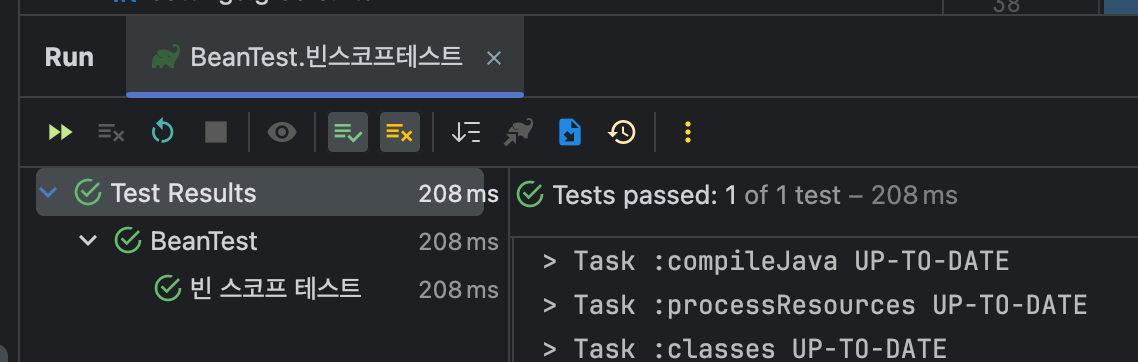
- 싱글톤빈은 스프링 컨텍스트가 로드되는 시점에 생성됩니다.
- 프로토타입빈은 해당 빈이 호출되는 시점에 생성됩니다.
- 싱글톤빈은 1개의 인스턴스만 생성됩니다. 따라서 모든 스레드에서 공유를 하게 되므로 필드에 상태를 갖는 변수를 두는것을 주의해야합니다.
- 프로토타입빈은 호출 될 때마다 빈을 생성합니다.
- 싱글톤빈은 사용이 종료되는 시점(컨텍스트 종료)에 소멸이 됩니다. (컨텍스트 종료 != 애플리케이션 종료)
- 프로토타입빈은 사용이 종료되는 시점에 소멸되지 않으므로 개발자가 직접 소멸시켜줘야 합니다.
- 싱글톤빈은 1개의 인스턴스이므로
singletonCounter1과singletonCounter2는 동일한 인스턴스 입니다. 따라서 동일한 count값을 참조하므로 각 인스턴스가 addCount()를 호출하면 count는 2번 증가하게 됩니다. - 프로토타입빈은 서로 다른 인스턴스이므로
prototypeCounter1과prototypeCounter2는 각각 다른 count를 참조하게 됩니다. 따라서 각 인스턴스가 addCount()를 호출하면 서로 다른 count가 1번씩 증가하게 됩니다.
Reference
Continue
싱글톤빈과 프로토타입빈을 함께 사용하는 예제
This post is licensed under CC BY 4.0 by the author.